The Backrooms' Style Sends Its Substance to the Background

The Backrooms has something to say about capitalism. But what, exactly? Spoilers to follow.
I had a good conversation with a friend the other day centered on what Wunderkind director Kane Parson's smash hit The Backrooms (2026) has to say. Well, we agreed, it's about capitalism, for sure. I mean, it's about a guy who owns a store and is really mad about it.
And it's about how capitalism chews people up—and about how feeling the wrong way about that, or learning the wrong lessons about responsibility can lead you to torch the essential human connections around you. And it manages to tie all these threads together by. . . . Well, that's the tricky part.
On its surface, The Backrooms is a story about a guy who's been ground into the muck of unfulfilling commercialism at the expense of his creative ambitions. Clark, our protagonist, is a trained architect who owns a failing furniture store.
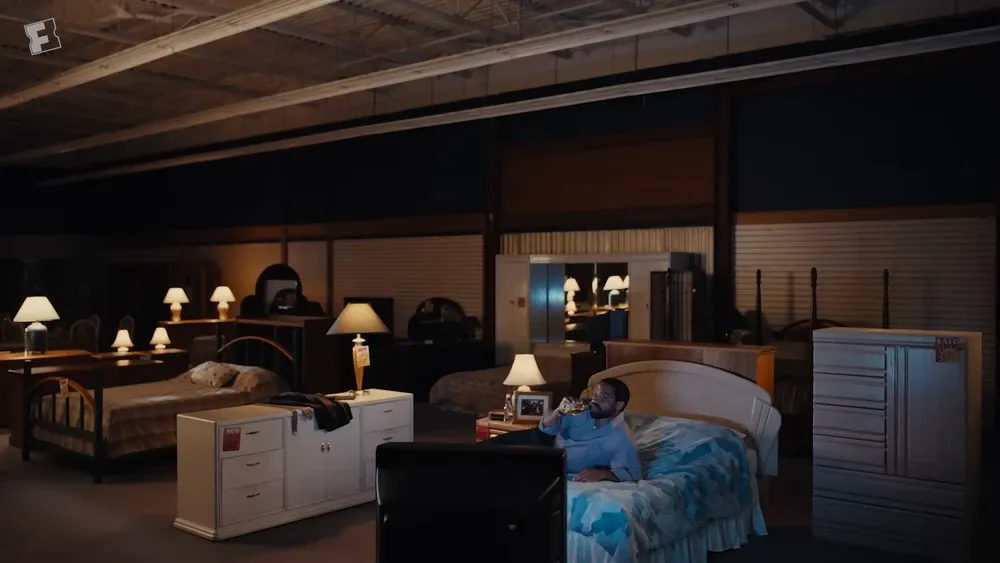
He struggles with taking responsibility for his actions, including those that dissolved his marriage. He retreats to the cold comfort of circumstances he believes to be far beyond his control. Holding a grudge against his unseen wife (whose ambitions to become a lawyer he sees himself as supporting, alone), Clark internalizes a kind of alienation from his own labor: I shouldn't be working here, I'm better than this, It's all her fault, etc..
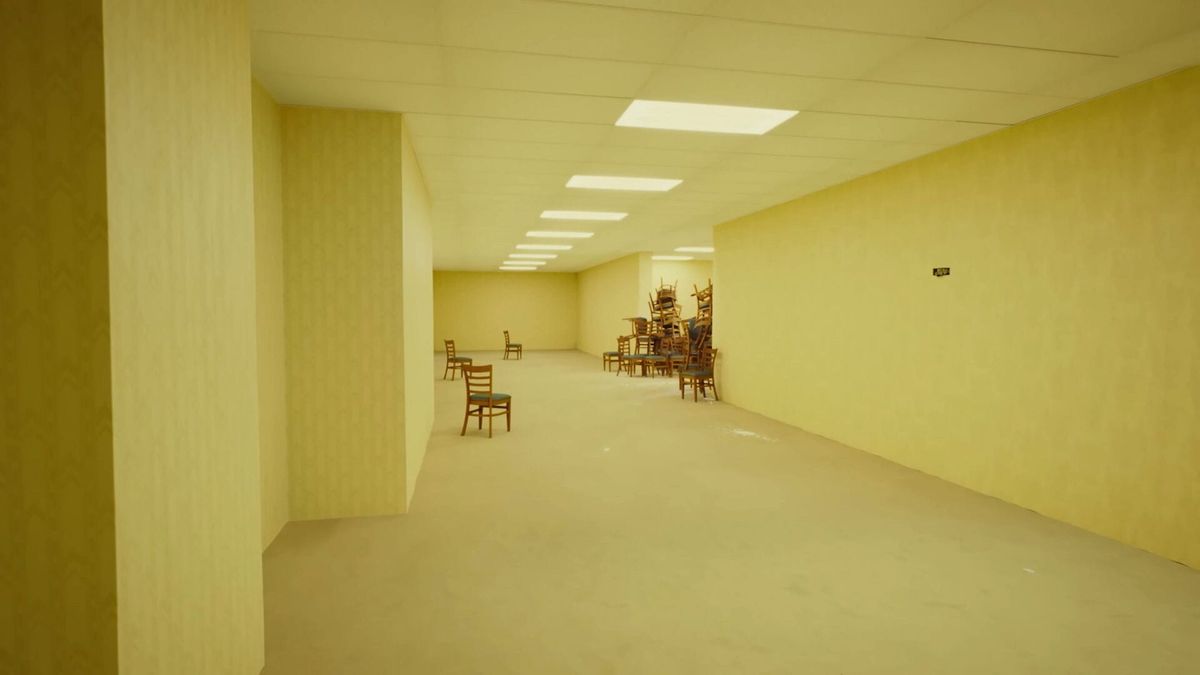
This mingling of material, economic reality with internal turmoil is reflected in his discovery of the backrooms, an alternate dimension (based on an anonymous 2019 imageboard post) that basically looks like a fever dream of a soul-crushing office building. There, misshapen apparitions of the furniture and fixtures in Clark's own store are scattered around infinitely sprawling corridors, and he soon leads his young employees to their doom.
So, it's a kind of capitalist hell? In a way, but hardly a specific one. If hell were divided into concentric circles not by sin, but by market sectors, the backrooms themselves would run between retail and office-work. But they're also intersected, here and there, with the hells of public pools, gym locker rooms, airport hotels, and sometimes your great aunt's red-carpeted living room. It's hardly a perfect match between theme and imagery, but you can kind of picture what that might look like.
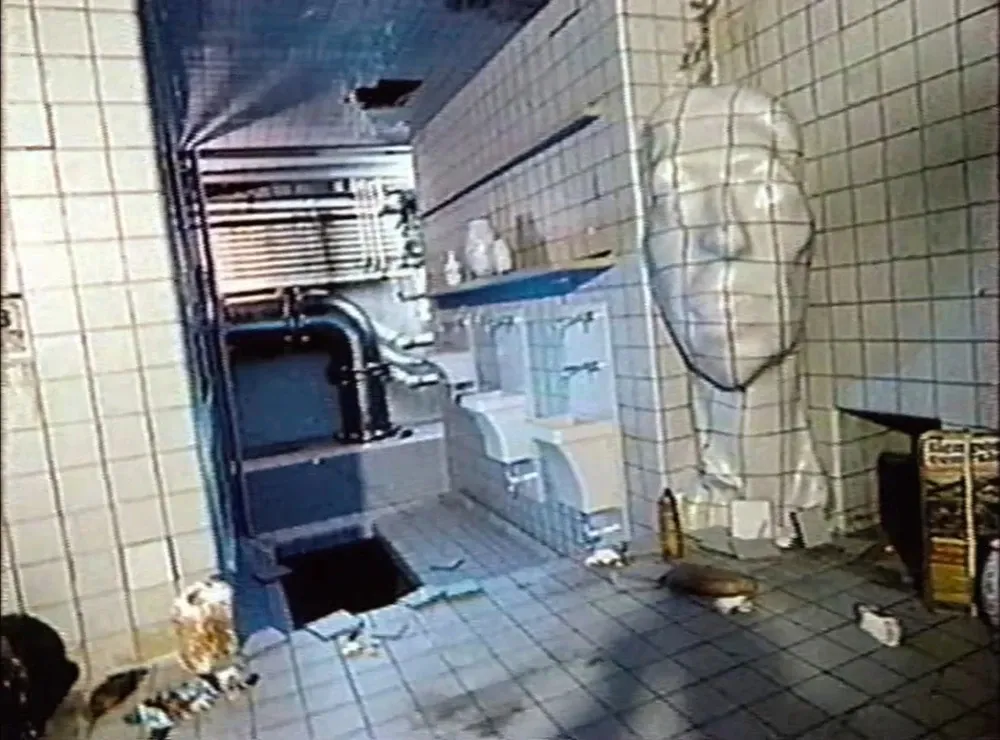
Here is a place that resembles where work gets done, but where no work actually happens, because here nothing matters. Is there anywhere better for "bullshit jobs"?
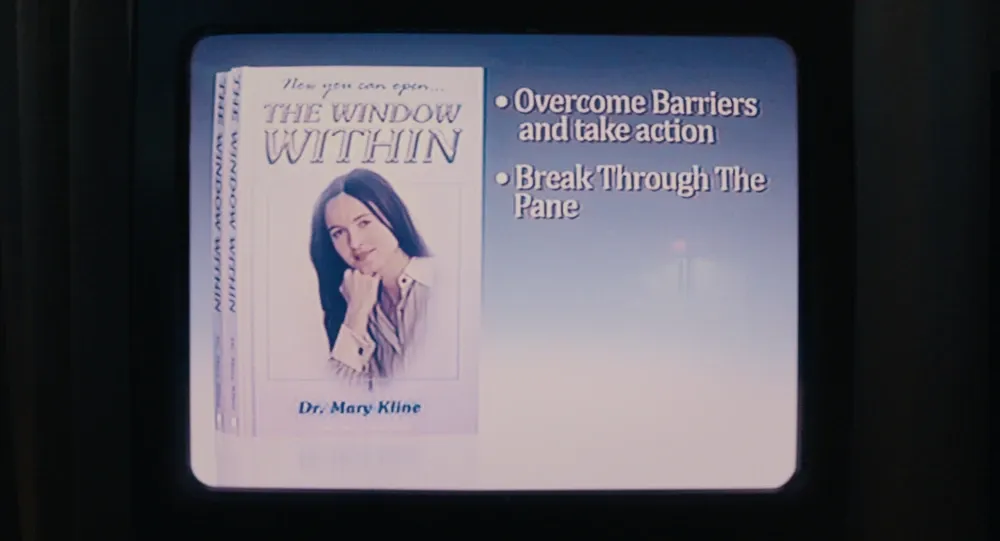
Similar confusions confound the characterization of the film's deuteragonist, Clark's therapist Mary. She's a lonely woman who has turned the abuse she suffered as the child of a paranoid recluse into a successful self-help program, effectively capitalizing on her own trauma. In this sense, she's Clark's inverse: having transformed her internal baggage into a commercial product, just as his commercial failures poison his sense of self.
But what, then, does it mean for her to step into the backrooms? Well, presumably, she's our cipher for the environment's uncanny capacity to "remember" the world wrongly. The backrooms are haunted by enigmatic, human-shaped entities that look like poor attempts at riffing on Francis Bacon portraits, or the kind of monstrous faces the brain visualizes in that viral optical illusion that asks you to stare at a dot on your screen while celebrity headshots flash in your periphery. Layered noses. Missing eyes. Wound-like mouths.
Gets me every time.
Flashbacks to Mary's childhood align these hazy impressions with the dreamlike qualities of her own memory, raising questions about the coherence and efficacy of her own supposed path to recovery and personal growth. Clearly she hasn't moved on, so why should we think her patients can?
In the end, Clark is devoured by a warped, raving parody of his own store mascot alter ego, while the film's final shot heavily implies that Mary herself never manages to escape the backrooms, instead devolving into a distorted memory of her own self-image. Yet as evocative as this image is, it hardly does much to clarify the muddled thematics that get us there.
Even setting aside the unexplained logic that makes Clark's doppelganger a totally separate creature while Mary seems to have metamorphosed into her own, this ending feels like an idea that was, probably for good reason, landed on early in the writing process and set in stone, waiting for the rest of the script to catch up in a way it feels like it never did.
Still, we might understand these two characters as representative of a critique of (contemporary/late) capitalism on the grounds that it a.) compels individuals toward ever more emotionally vacuous labor under the guise of economic stability and necessity, thereby eroding interpersonal relationships through entangled sentiments of responsibility and guilt; and b.) convinces individuals to transform their very psyches into vectors for productivity and commerce, as it suffuses those psyches with noxious regurgitations of things they sorta kinda remember.
All the while, the system itself retreats into the background—into the backroom—foisting sole responsibility for economic circumstances onto individuals and positioning itself as an inescapable condition.
If it sounds like I'm building toward a Mark Fisher-style "capitalist realism" conclusion, it's because I think the film wants us to. Hardly by coincidence, Kane Parson's inclusion of the track "B1 – All that follows is true" off the Caretaker's landmark multipart exploration of dementia and memory loss, Everywhere at the End of Time, returns us to the realm of the "hauntological," and thereby to the Caretaker's critical collaborator Fisher's recurring diagnosis of contemporary capitalism's "slow cancellation of the future": an eternal present, fueled by and forever nostalgic for a past that never really was.
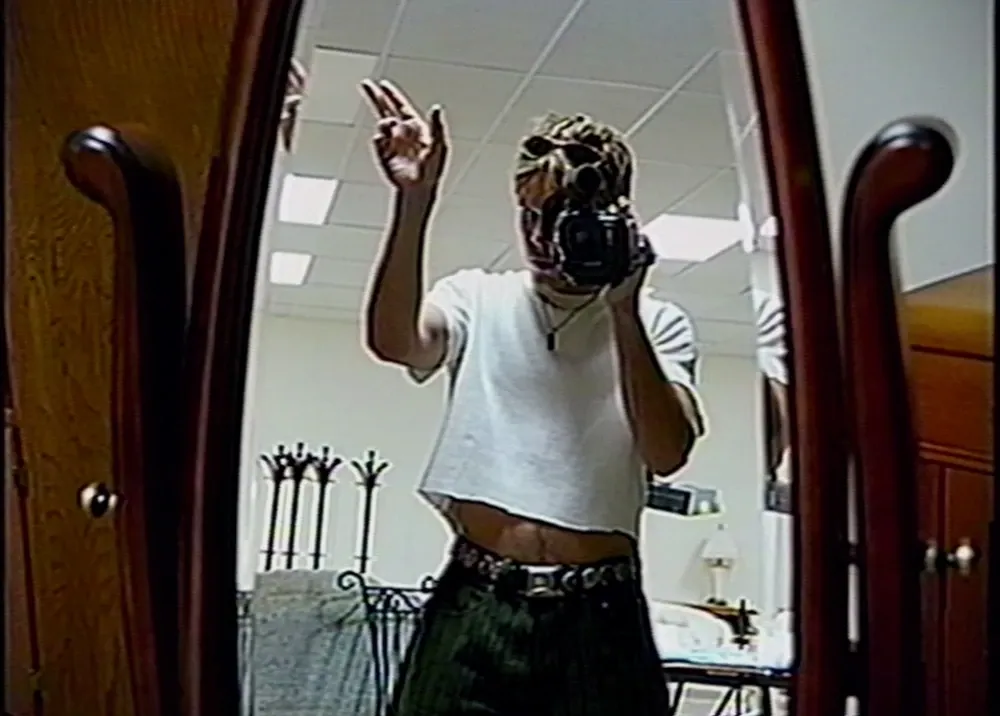
The film feels so very self-conscious here. It can't arrive at the mid-90s "analog horror" aesthetics it's built upon—overblown microphones and VHS fuzz—without winking (somewhat nervously, anxious for approval) at the irony of its doing so. "Y'see," the film seems to say, "it's a movie about half-remembered impressions of objects and places from a particular time, but it's directed by someone who understands that he only understands the aesthetics of the movie's setting through half-remembered impressions and resonant nostalgias that predate his birth."
I start to get the impression that the Caretaker is here not just because of an allusion to his own sampling of The Shining, a movie soundtracked by music of the past echoing through the haunted halls of a vacant hotel's bygone grandeur, which ultimately drags the present into its fading memory—but also, and maybe more so, because the Caretaker provides the usual soundtrack for a particular kind of YouTube video. A kind of video familiar to The Backrooms' younger demographic, featuring spooky, "liminal" spaces—many of which are indeed discarded shells of the creatures of capitalism(s) past: dying malls, empty parking lots, and yes, vacant hotels.
Why do we think out-of-style carpet in particular is so scary to folks?
Which isn't a bad thing! For too long cinema has pretended that it's above the influence of the internet, video games, and social media. I'm glad Parsons is out there citing Portal as a major influence. But I do think the film's evident insistence on its authorial voice weakens an audience's attachment to its characters. Directorial choices that currently feel more like memes would feel more like statements if they were more closely connected to the emotional stakes of the film and its characters.
What is Clark hopelessly nostalgic for? What do Mary's fractured memories prevent her from realizing? Instead, we find characters and circumstances that seem to exist only to populate a concept that only makes sense as an artifact of a time they don't have anything to do with. And admittedly strong performances just can't save a repetitive script for a movie that broadly seems more interested in its audience's hangups than those of its characters.
I'll admit: partway through watching this movie, I had the unfortunate realization that I think I'm the worst possible demographic for this project. Were I totally unaware of the backrooms, as a concept, I probably would have been astounded by the originality of the setting and its unnerving ambience. Look at that! A nightmare of beige and boredom.
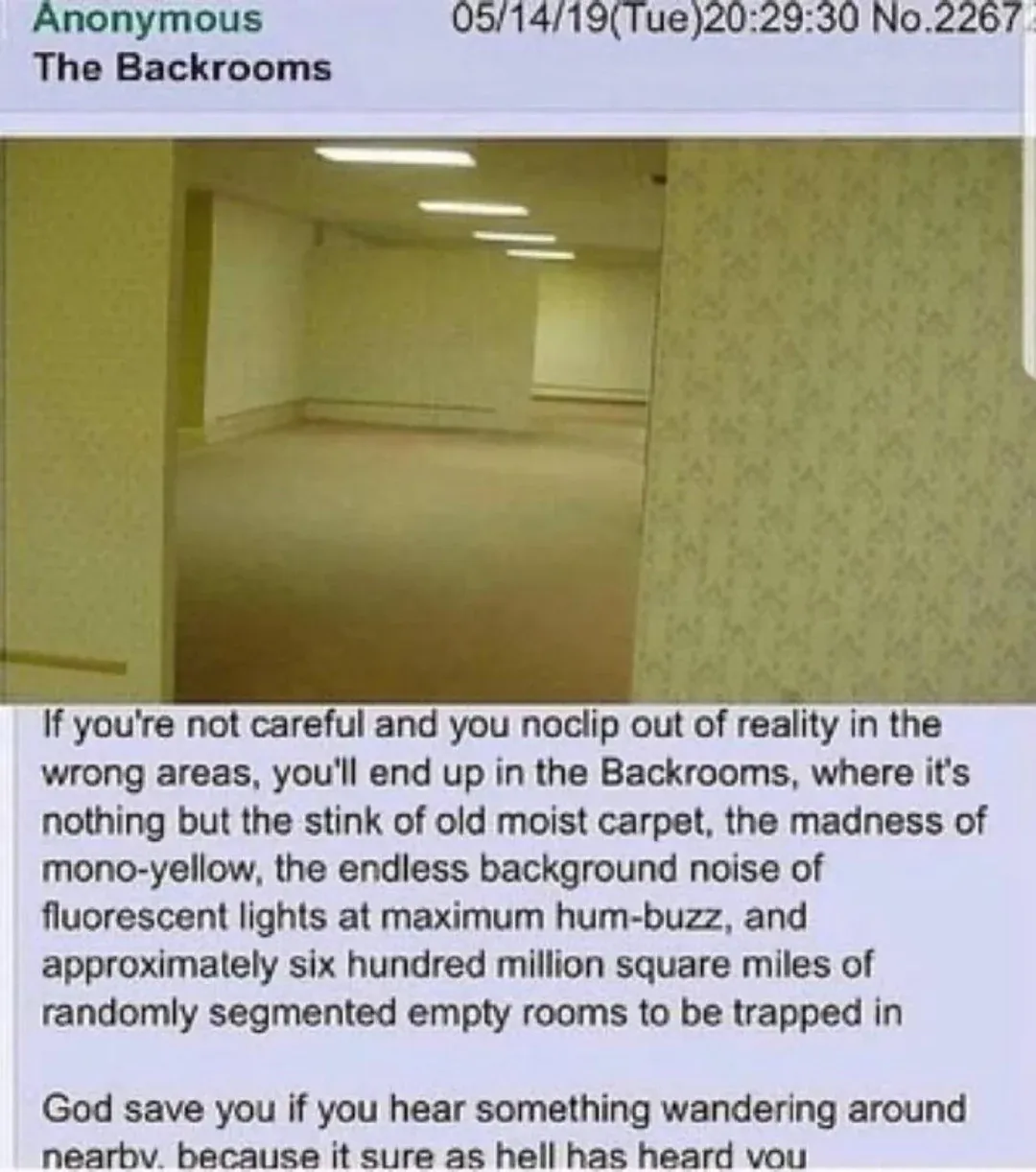
On the other hand, if I were 14 years old, I'm sure the backrooms would already be my jam. After all, didn't I cut my teeth as an adolescent "netizen" on the X-Files-style SCP Foundation short horror fiction repository, and the first waves of "creepypasta"? Don't I remember getting spooked by Marble Hornets forums thread and wondering if my own copy of Majora's Mask might also be haunted, in spite of it having been purchased new? No doubt 9-year-old Patrick would have been running around a Pier 1 Imports franchise, snooping behind sectionals and shelving units for secret doors and liminal spaces of my own discovery.
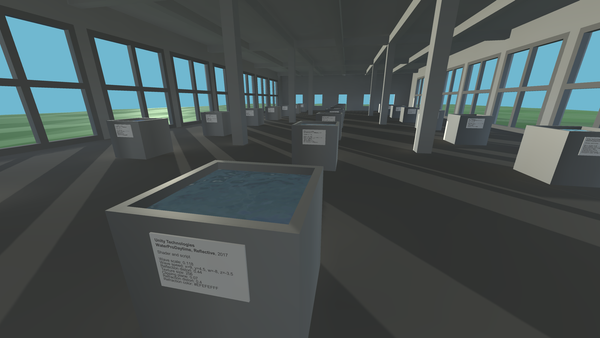
As it stands, though, having observed, from a distance, the backrooms phenom since its original virality, and having always been far more interested in the Borgesian implications of its infinite spaces than with the idea that big scary monsters might be lurking around its corners, and having even played a little bit of several video games that all aimed to capture the magic of that very first post (see above), I resign myself to the conclusion that this one's simply not for me.
Have at it, kids.
POF