Playing (With) Video Games

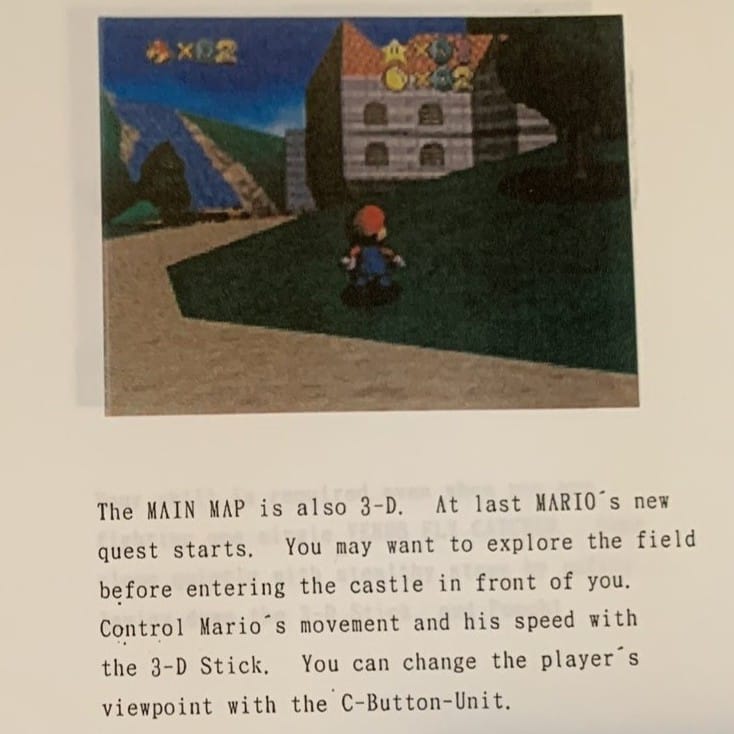
According to a famous anecdote about the origins of Super Mario 64—that is, about the origins of 3D platforming—before designing any levels, enemies, or objectives, the game's designers began with movement alone. They wanted to ensure that players would have fun being Mario in the absence of anything and everything else. They wanted to make running fun, jumping fun, crouching, climbing, swimming, flipping, and even adjusting the camera fun.
And sure enough they did! Designing Mario and his moves in a void meant that the rest of the game was sure to be built on a rock solid foundation. It's part of the reason why, to this day, a new player of the game will probably spend a few minutes just running around the castle grounds once they're given control.
You get to play with what's in front of you. There, among the hills to hike and trees to climb and ponds to swim in, skills like back-flipping and triple-jumping become part of a basic vocabulary.
The fact that the game begins not in medias res, with a clear goal, but just outside the castle where the inciting incident—Bowser's takeover—is revealed, testifies to the designers' intent to gently acclimate players to 3D maneuvering. If popular game design criticism has spent the past four decades explaining again and again the "hidden tutorial" of Super Mario Bros. World 1-1, it has done so at the expense of investigating the far stranger opening that succeeded it 11 years later. Here, no Goombah is going to kill you if you don't act fast.
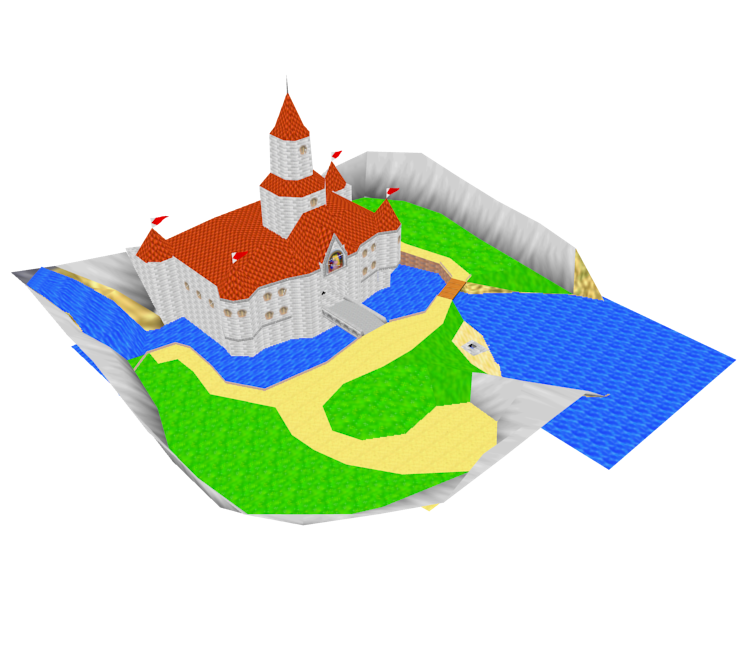
Whether or not the design anecdote is true or apocryphal, one can read the opening of Mario 64 as a moment where the player is encouraged to experiment with Mario's capabilities before entering into the game proper.
In other words, the game is designed to let you play with it, before you play it. It's a toy, before it's a game.
This distinction might seem minor, but I think it's actually fundamental to the thing that happens when we interact with this weird medium of ours. We play a game when we treat it as a set of objectives, as a progression, as a narrative, or as a means to an end of an experience. We agree to follow the game's rules and do what it says and try again when it tells us, "Game Over." We achieve high scores, we level up, we watch cutscenes, and we embody characters in the world.
To imagine—or to recapture—what playing with a game means, think of how a child plays something like Mario 64. Or Minecraft. Or any game at all. Think of how you used to play (with) video games, if you did so. Maybe this kid can't read yet, or maybe they can but just don't care about what the game is telling them to do.
Instead, they run around, jump off cliffs, accidentally erase a save file, collide with walls, get stuck crouching, and so on. Their goal isn't to achieve anything, but rather to test the boundaries of what they game will let them do—or, given more complex mechanics, to figure out what all they're even capable of doing.
They play with the game as if they were playing with a toy, not engaging with media in the way we're primed to as adults.
When I was a kid, my parents sometimes indulged me during a stay at hotel by renting an hour or two of the in-room Nintendo 64 system, developed by LodgeNet. Excitebike 64 was a favorite of mine, since I never owned the game myself. I doubt I ever won a single race or completed a single time trial. I liked driving the bike around! And seeing the little guy in blue fly up in the air when he crashed!
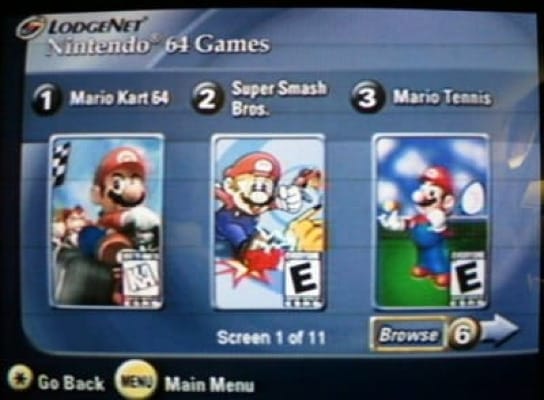
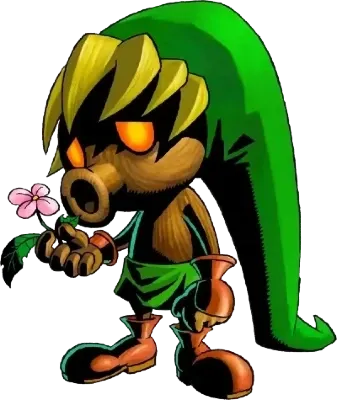
Pilotwings 64 afforded similar pleasures, as I climbed and dove from the invisible ceiling at the top of the map to the ground and back, but strangest of all I remember enjoying the opening to The Legend of Zelda: Majora's Mask simply because I liked running around the spooky forest that opens the game. Actually, as soon as Link got turned into a Deku Sprout, I lost interest.
Finally finishing some games that I had somehow let slip past me over the last console generation—from Bloodborne to Control to Death Stranding—I was struck by the way the valleys of my enjoyment of these titles coincided with the moments when I felt I was playing them just to catch up with everyone else. Control before Alan Wake II, Bloodborne before Elden Ring, and so on.
On the other hand, when each was really working for me was when they were allowing me the freedom to play with them. When Death Stranding gives you a mountain and some zip-lines, or when Bloodborne flat out refuses to tell you where to go. When the game shuts up—even when I was enjoying what it was saying!—and finally lets me run around the damn castle grounds.
The idea of dividing playing with from playing was an idea I first thought through in graduate school. Inspired by the work of Adrienne Shaw, Rune Klevjer, and Daniel Vella and Stefano Gualeni, I wanted to get to the bottom of characterization in video games.
To do so, I thought of centering intentional action: that we played a game as an actor plays a role. Now, I thought, I play Breath of the Wild, unlike how I used to play with Majora's Mask. (Roger Caillois' theories on freeform, childlike paidia opposed to rules-bound, mature ludus, certainly came up, too.)
Excitebike 64 Crash Compilation, via WatchmeplayNintendo.
While my dissertation ended up going in a very different direction, this distinction between playing and playing with has stuck with me, even if (until now) only privately.
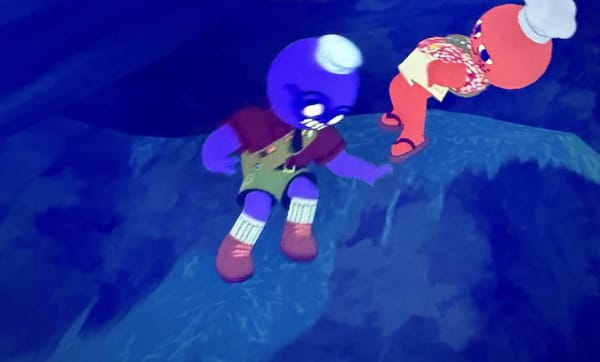
Maybe it's just a function of getting older, of wanting to regain a sense of childlike whimsy, but when I think back on my favorite moments of gameplay in the last few years—flying across the map in BABBDI, or physically fumbling a laser flare and calling a missile strike on my friends in Helldivers 2—many of them seem to emerge not from a coordinated expressions of mastery or from intentional action in the service of narrative or characterization, but from good old fashioned messin' around.
All of which brings me to this newsletter, Critical Theorycraft, a project I'm beginning here with a challenge to myself: to play with games, literature, movies, and ideas. Not to play them to their ends, but to see what tensions and textures they afford when attended to with simple—mere—curiosity.
Thanks for reading, and I hope you'll stick around.
POF