After More Than a Decade, I Finally Saw a New Cutscene in The Witcher 3

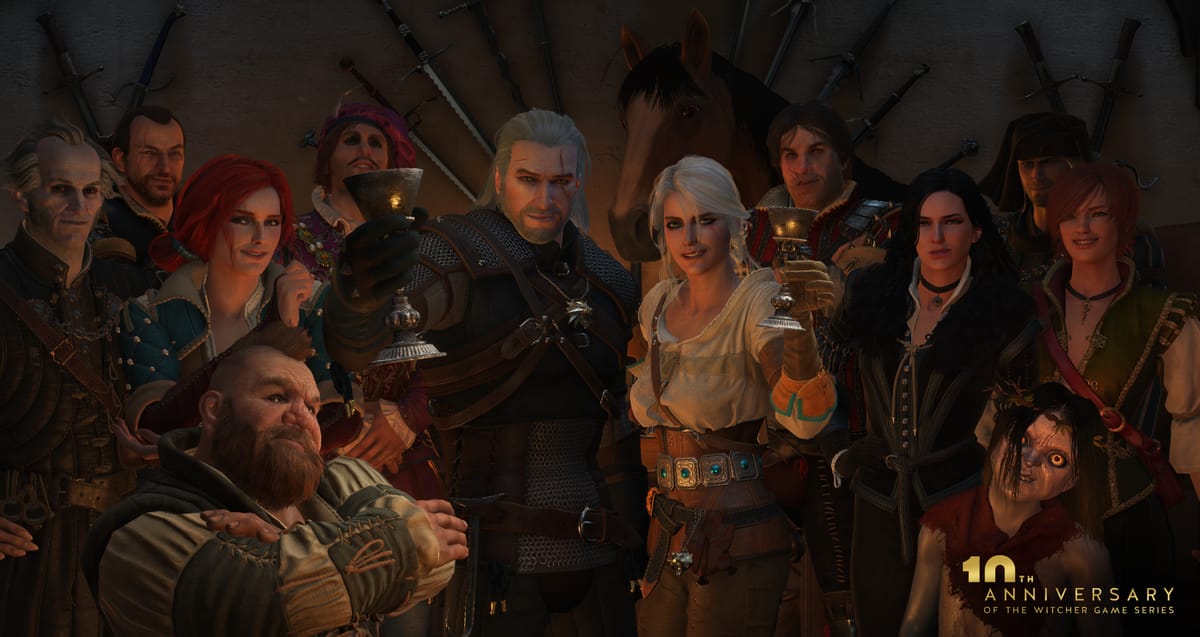
I have a habit of setting games down and restarting them. No game have I played less of longer than this.
I came of age in what now appears like the nadir of the so-called computer role-playing game (CRPG), between the golden age of Planescape: Torment, Fallout, and Baldur's Gate, but before the recent renaissance driven by Pillars of Eternity, Disco Elysium, and, well, Baldur's Gate again.
These games tended to be strategically deep, with dense layers of character statistics, abilities, and equipment; as well as tactically challenging, requiring a slow, thoughtful approach to combat. Most of all, they were heady, exploring big ideas and nuanced settings, and talky, encouraging players to explore largely un-voiced conversations and dialog trees that might comprise entire play sessions. By the mid-2000s, these offered—or rather, they were assumed by publishers to offer—only niche appeal.
As developers like BioWare leaned further and further into the action-packed, fully voice-acted, console-centric, cinematic experiences they first explored with Star Wars: Knights of the Old Republic and carried through to the Mass Effect series, my fledgling appreciation of the weirder and wordier stuff was sharpened on the rough edges of flawed gems.
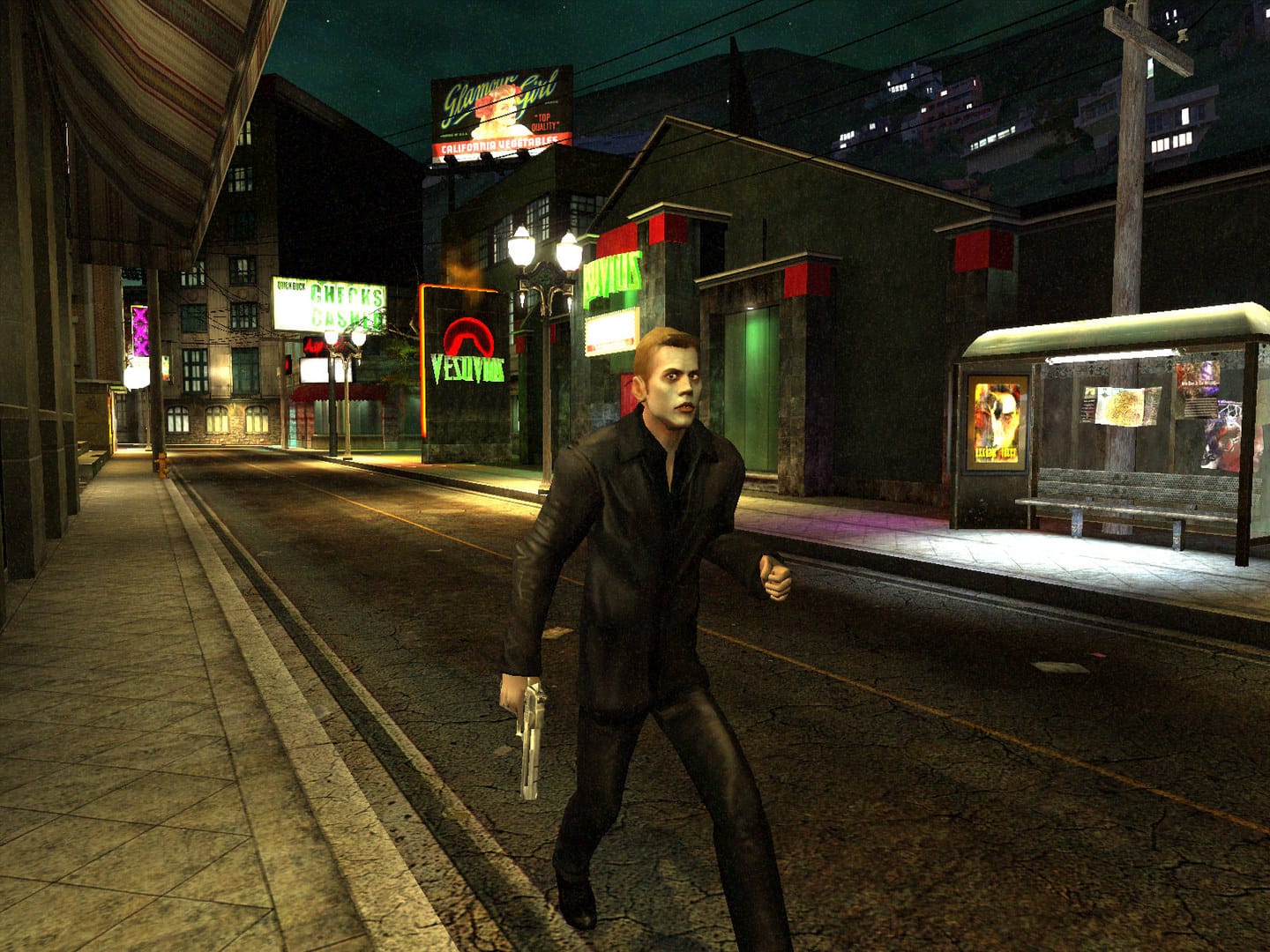
Vampire: the Masquerade – Bloodlines (the rare game with a subtitle and a sub-subtitle) was one favorite, unmatched even today in its goth grindhouse glam and grime. Dragon Age: Origins was another: a confused return to form from a studio whose identity crisis remains unresolved. But perhaps the strangest relic from these dark ages is The Witcher, first released in 2007 and released again in 2008, as I first played it, in an "Enhanced" (read: playable) edition.
Although I'd come to adore it, I played the first part of that game probably three or four times before finally breaking through to its second act, and then straight on to its end. Let me reconstruct my conundrums.
Problem 1: an infamously bad English dub.
Solution: simply switch the dialog to Polish (which still sounds, to me, like The Witcher was meant to sound—the Game of Thrones-y brogues of the later games still seeming somehow foreign, even if I've come around on protagonist Geralt's American growl, especially).
Bonus: this delightful conversation with a fish priest that pops into my head to this day.
Problem 2: an infamously challenging first boss fight.
Solution: In all likelihood this very GameFAQs thread. Or, alternatively, the full-game strategy guide that came packed in with the Enhanced Edition box. To paraphrase what I've written elsewhere, we used to be a proper country etc., etc..
Problem 3: Something deep within me, somewhere I'm unable or afraid to look, prevents me from playing an RPG without thinking, "this is great!" then setting it down, losing interest, forgetting where I was or rethinking my character build, and restarting.
In the best of cases, this happens only once. In the case of Disco Elysium, it's happened twice. In the case of Bloodborne, four before I made it through.
Solution: I'll have to get back to you on that.
Y'see, The Witcher 2 didn't fare any better, although at least I set aside that game for technical reasons, my aging computer, at the time of its release, being unable to render more than a handful of frames per second. Still, play it through, I eventually did, and began eagerly awaiting the third game's arrival.
At which point I played through the prologue in White Orchard, met the Emperor and got grounded in the game's main quest, and promptly set it down for a little bit. Then, 6 months or a year later, I did the same thing again, this time moving up to the Bloody Baron quest, which some have called the game's best. Then I probably ran that cycle again another time or two.
Some years later, I figured, the problem all along has been my insistence that The Witcher 3 is an old-school CRPG. Why, clearly it was mean to be played on a big screen! (By this time, reader, I was deep in my dissertation and the depths of the first round of COVID lockdowns.) So, I bought the game for the PlayStation 4 and played from the start all the way nearly—very nearly!— to the end of that damn Bloody Baron quest. Except that playing the game on the less powerful console meant that each and every loading screen was now a real pain.
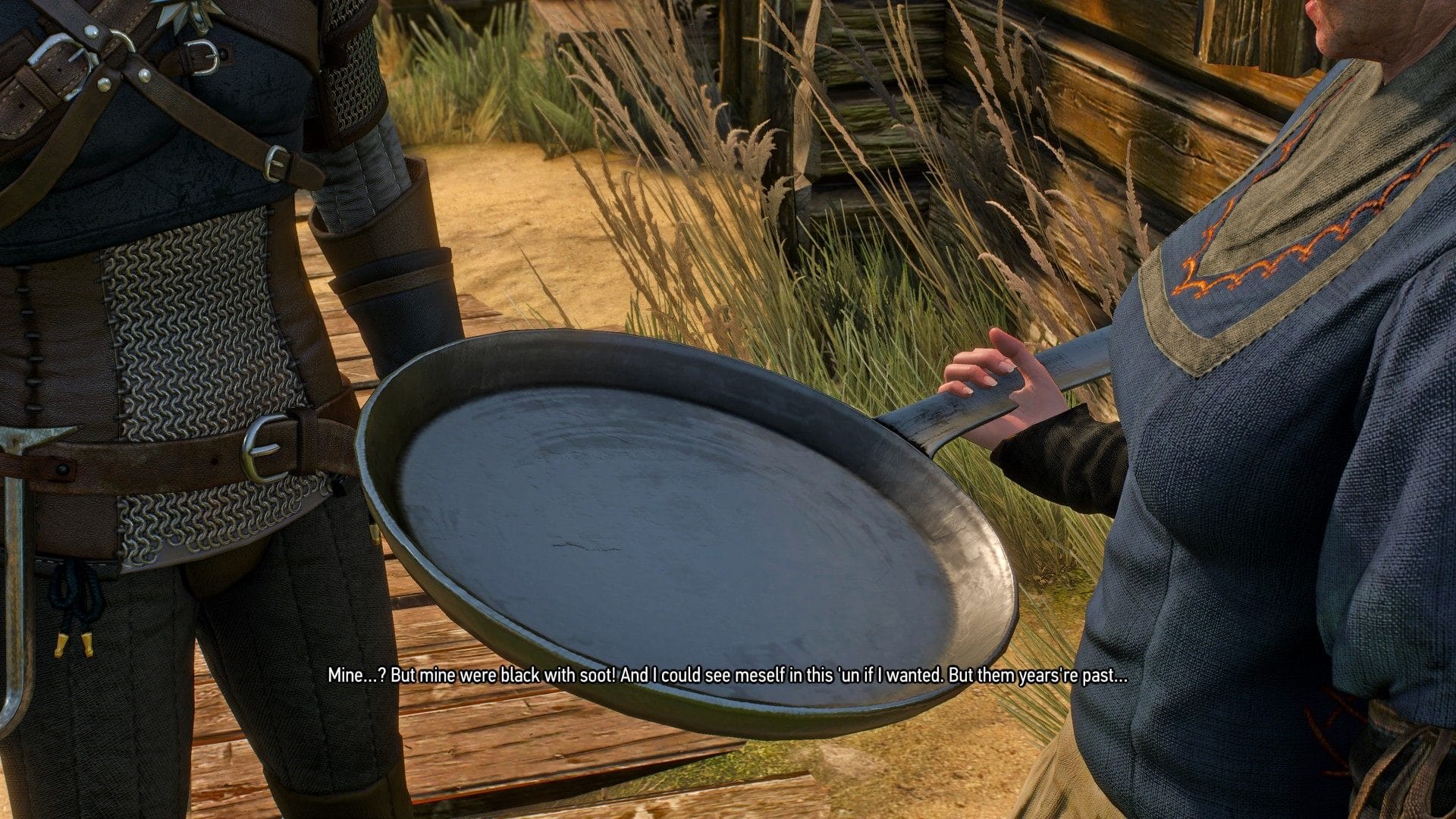
Back to the PC, then, now with a 30-foot HDMI cable running from the desk in my apartment to the TV. But without the save game transfers that would only later be added, it was also back to White Orchard, and back to that fight with the bear, and back to finding that stupid frying pan again.
This whole time, mind you, I'm transferring into the third game my save data from the second game, to carry forward not just those decisions I made in The Witcher 2, but, implicitly, those I carried forward into that game from the very first game. I was upholding a legacy!
By now, I had begun to truly despise the Baron and his swampy surroundings. His tragedy didn't so much as dent my Geralt's icy composure. Sure, I thought Geralt might think, I've heard it all before. Because, indeed, I had. Was this, in itself, a new avenue for role-playing? A kind of world-weariness caused by my own, subjective weariness of the game's world?
(In my most radical extension of this idea, I figure even my hazy knowledge the conversations I've run through two or three times now in Disco Elysium might actually carry over into precisely the kind of déjà vu fugue that game's protagonist operates in. Better yet, might not a player be able to craft an ideally artful narrative movement across any choice-driven game, if only they already knew where those choices would lead?)
Over the last few weeks, and thanks to some additional wiring, I've put together a nice streaming setup between my desktop and our big-screen TV over a local network. What this really meant, it seems, is that I could try playing The Witcher 3 again, with the perfect setup: on a big screen, with PC power.
This time, I just picked my most recent save (from 2022) and carried on. This time, I finished the quest with the evil tree. This time...
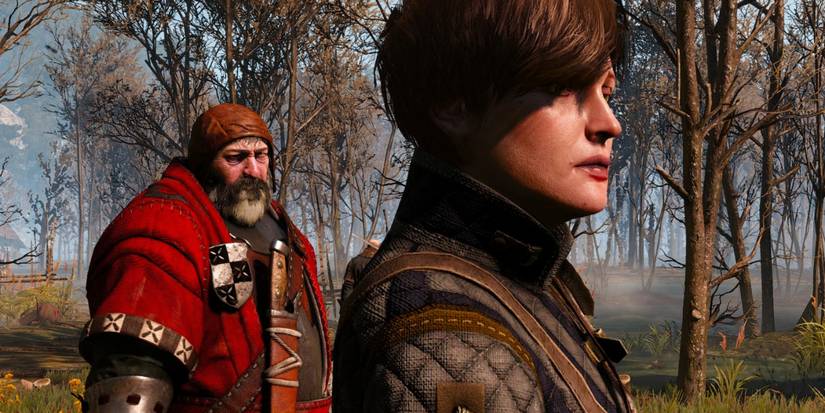
This time—what's this? Who's that? I've never seen this character before. 10 years on and I've never met the Baron's lost daughter! Who are these folks she's with? Good god, it's a new cutscene! I'm getting to select new dialog. I'm reacting. I'm playing.
I've since kept on playing. For at least a half dozen hours or so. But already, if I'm being honest, I can feel the steam petering out. Perhaps the big city I just arrived in will be enough to keep the momentum going. If not, maybe I'll have sunk enough time into this run to return to it down the line. Failing that, it might just mean that the big open world of The Witcher 3, so unlike the more focused and intimate environs of its forebears, just isn't for me. Or isn't any longer.
It's a strange thing to grow up alongside the video games in your life, especially as franchises like The Witcher stretch on from decade to decade, chasing higher fidelity and higher profits, with releases whose individual development cycles now take 10+ years themselves. (On that note, I'll take smaller games over bigger, "AI-powered" games any day, and I don't think I'm alone.) Maybe the whole "franchise" thing is fundamentally to blame? I'll leave that question to Cameron Kunzelman.
I know I've been writing a lot about nostalgia in this newsletter, but indulge me again as I say that it's weird to consider young teenage Patrick playing The Witcher: Enhanced Edition, assuming that, so long as they keep making The Witcher games, he'll keep playing them because, hey, he likes The Witcher!
Am I, right now, missing out on what increasingly appears to be a lifelong accretion of the veritable video game sublime by not having finished The Witcher 3 yet? Or is he? And what do I owe him, anyways?
POF